Japandi looks simple until you try it around furniture you already own. Match every timber and the room can feel flat. Clear every surface and your everyday things have nowhere to go. Buy the beautifully low chair and you may discover you don’t enjoy getting out of it.
The useful question is how to make your home calmer while keeping its character. Start with the pieces you want to live with, then work on their surroundings: the contrast, the space between them, and the light you use after sunset.
What is Japandi interior design?
Japandi is a contemporary name for interiors drawing on Japanese and Scandinavian design, with an interest in craft, simplicity and daily use. The exchange has a longer history: Designmuseum Danmark traces Japanese influence on Danish crafts around 1900 and throughout the twentieth century.
Warm materials also appear in organic modern interiors. Here, the useful emphasis is on how furniture, storage and small routines fit together. A ceramic bowl alone won’t do that work.
Japandi colors: give a quiet room some contrast
If your pale sofa, rug and walls blur together, another beige cushion won’t give the room much definition. Choose where you want a clearer outline. A darker chair frame, a timber cabinet or one substantial picture can make the lighter surfaces around it feel more deliberate.

Start with the color you cannot easily change, usually the floor or your largest piece of furniture. Put paint and fabric samples beside it. Look for an undertone you enjoy together, then check again under your evening lamps. A warm white that works with walnut may look yellow beside another timber.
At Azabu Residence, Norm Architects and Keiji Ashizawa Design use dark wood, stone and textured textiles in a Japanese and Scandinavian interior. It is a useful reminder that pale rooms are only one option. Our takeaway: let a few related materials carry the atmosphere, rather than making every object an accent.
Keep a color you already love. A muted olive seat can sit comfortably among brown wood and warm gray walls. Use our nature inspired color palettes to explore the relationships, then test actual samples at home.
Mix wood and texture without making everything compete
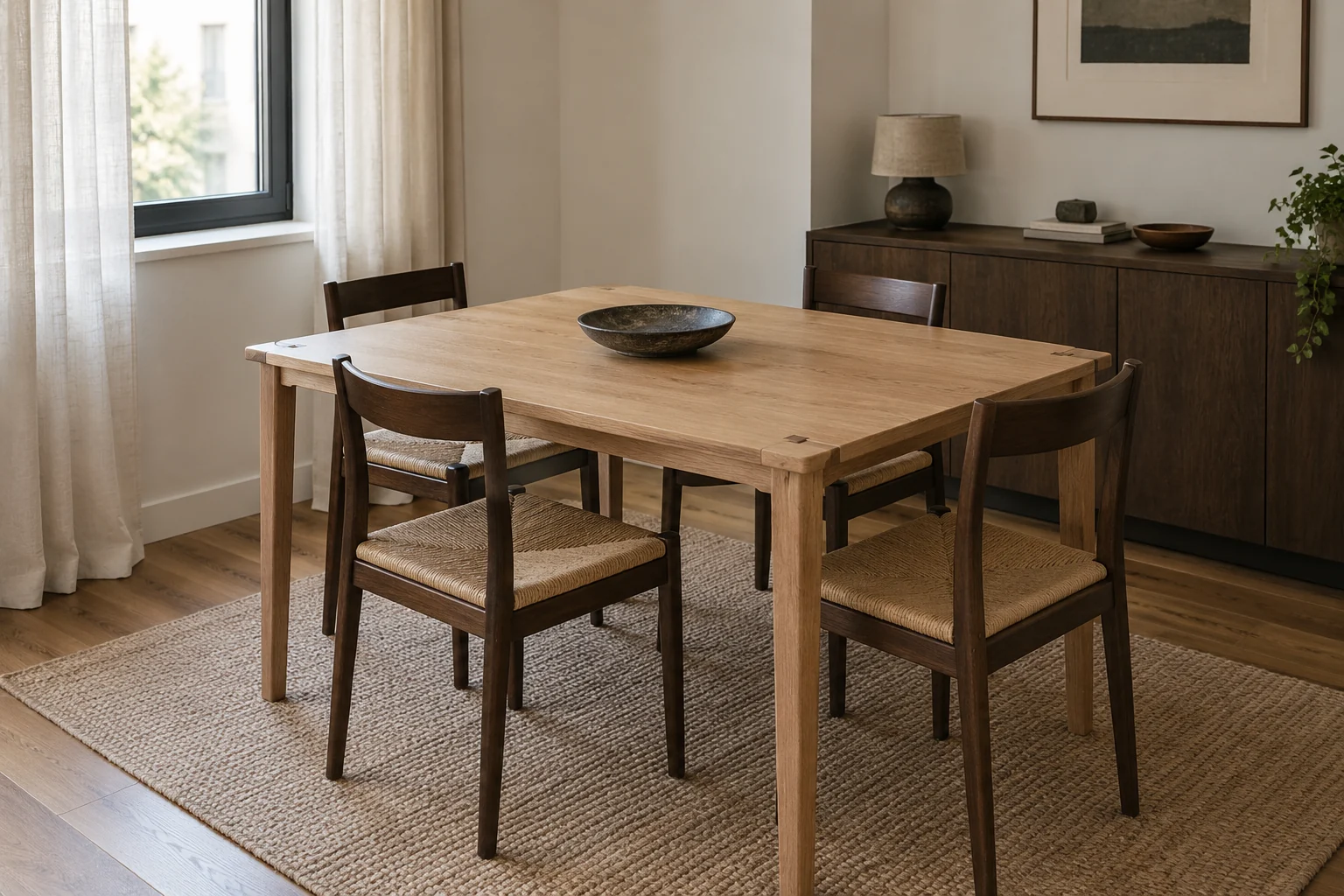
In the dining room above, the pale table is the main surface; darker chairs give its edges definition. The cabinet repeats the darker tone, so the chairs feel connected to the room. Nothing needs to come from a matching set.
Give texture different jobs, too. The table has a relatively smooth surface for eating and writing. Woven seats bring finer detail where you sit. Covering the walls, rug, cushions and furniture in equally pronounced texture would make the room harder to read.

Before adding another finish, look at the joins: where wood meets fabric, a tabletop meets its legs, or a rug meets the floor. These small transitions can supply more interest than another decorative object.
Japandi furniture should fit the way you live
Low seats and delicate frames can look graceful. Test the seat with your feet on the floor and your back supported, then stand up. If it takes an effort you would dislike every day, keep looking. A photograph tells you very little about that part.
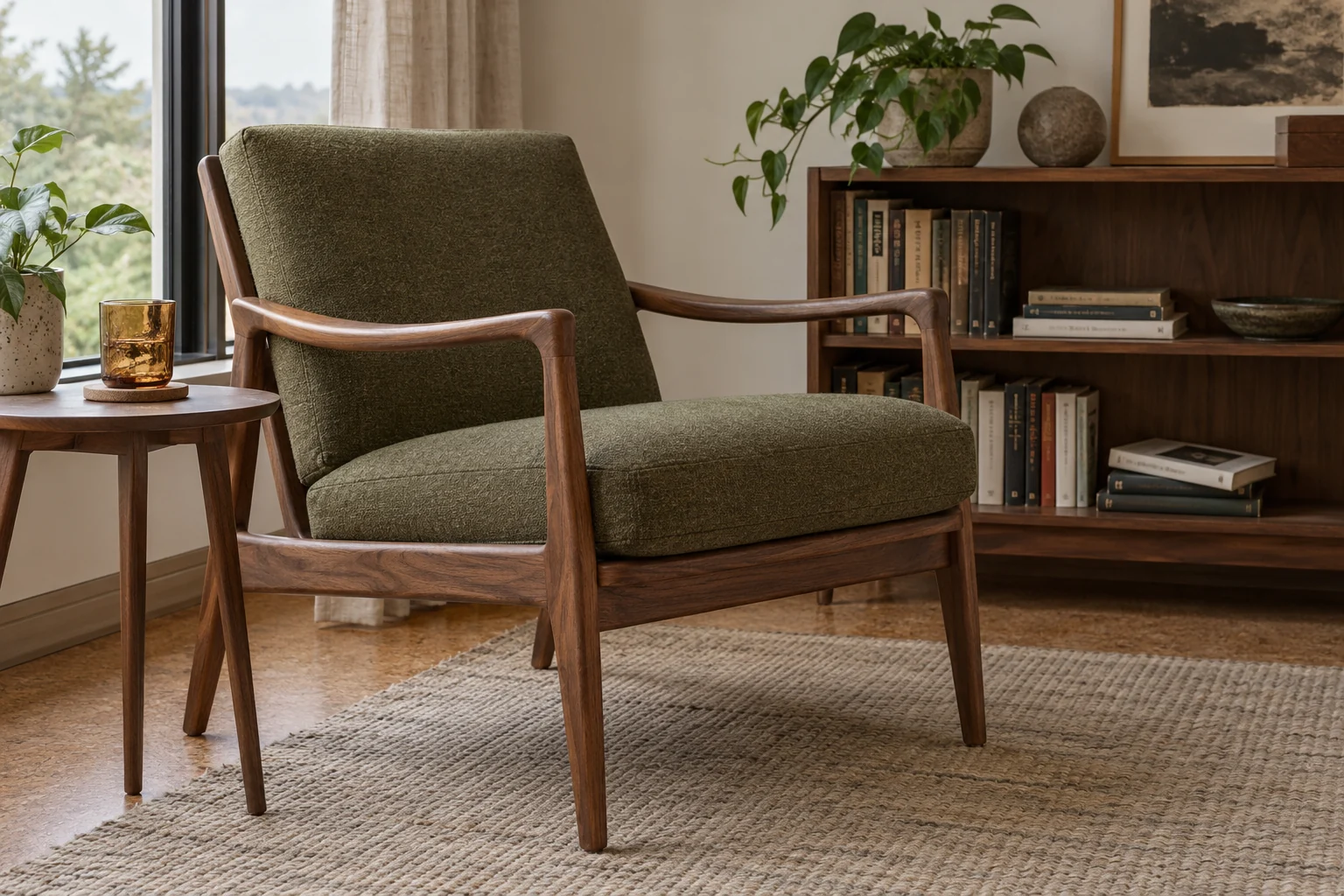
Try the arrangement around the seat as well. Can you put down a drink without leaning forward awkwardly? Can someone walk past while you sit there? Move the table closer before buying a bigger one, and keep the main route outside the sitting area. Our awkward living room layouts show how that changes a room.
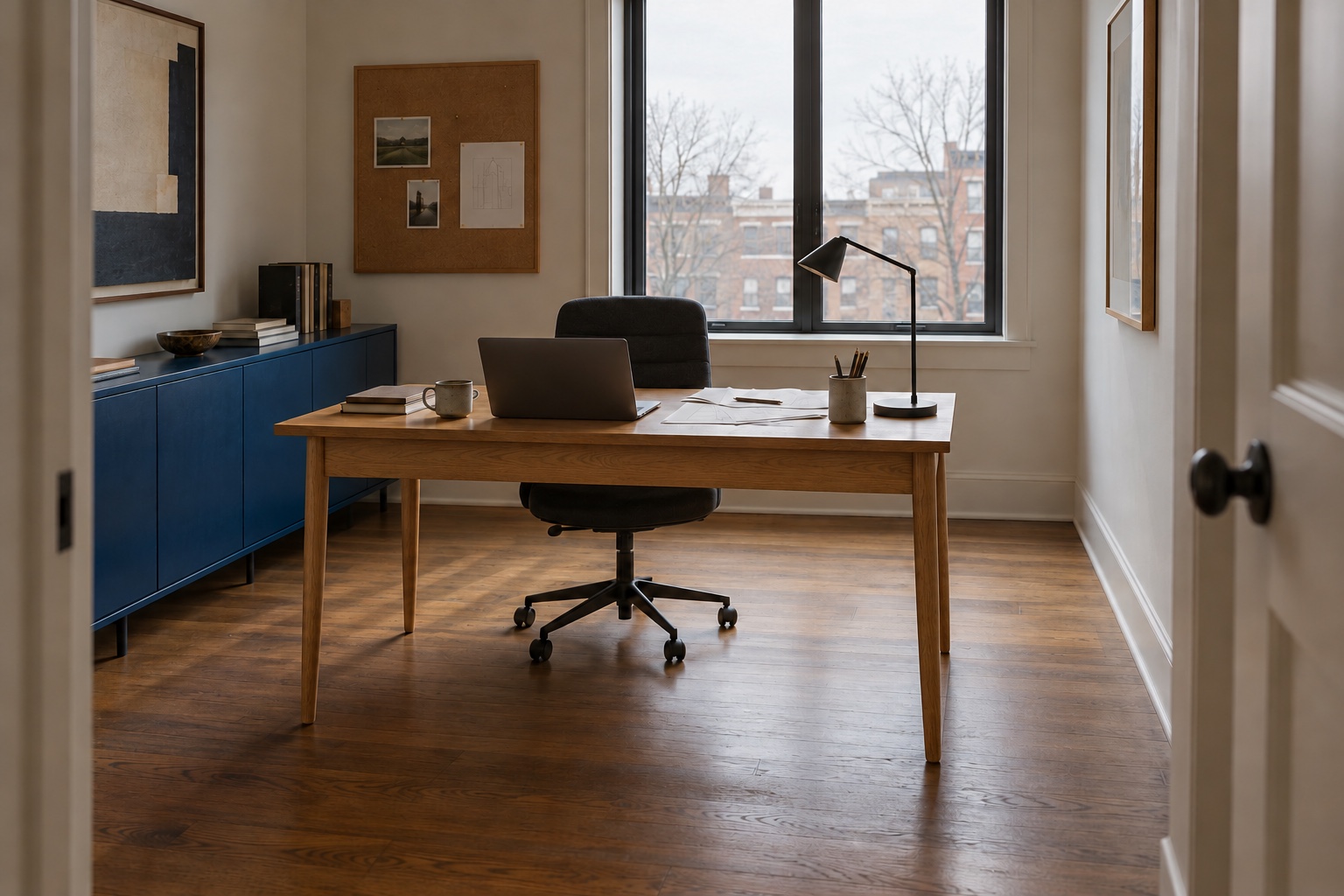
In a home office, pull the chair back as though you are getting up. Check that you can move comfortably, then sit down and reach for the notebook or drawer you use most. Closed cupboards can hold the rest without taking over your working surface.

At Kinuta Terrace, Norm Architects and Keiji Ashizawa worked with Karimoku on furniture developed alongside the apartment renovation. The designers describe connecting the spaces and allowing light and air through. The lesson to borrow is that furniture belongs in a plan: consider what a piece lets you see and move around, as well as how it looks by itself.
Japandi storage: give everyday things a nearby home

A bedside is a good place to test the idea. Allow surface space for your book, glasses and water. A wall light can free some of the top, provided its position works when you sit in bed. A drawer gives spare cables and a glasses case somewhere close to go.

Let the same logic guide a Japandi kitchen. Keep the preparation surface useful, put frequently used tools near the task, and reserve open shelves for dishes you actually reach for. Closed storage can hold the less graceful necessities. You should be able to make breakfast without dismantling the styling.
Japandi lighting: keep the texture, soften the contrast
In a room with few colors or patterns, wood grain, woven cloth and the spaces between objects do much of the decorating. Light needs to keep those differences visible after sunset. If everything is equally bright, the pale wall and linen sofa can merge again; if only the ceiling is lit, the darker timber may disappear.
Try a shaded lamp beside the timber cabinet. Let some light reach the wall behind it, while the shelves retain a little shadow. Beside a linen seat, a simple paper or fabric shade can supply a softer glow without adding another busy finish. Keep a separate reading light where you need it.
Isamu Noguchi’s Akari lights, made with paper and bamboo, are a useful reference for this relationship between material and light. The lesson is in how the shade filters the light, rather than the lantern shape alone. Choose a lamp that belongs with your room’s existing materials and still looks considered when switched off.
For placement and glare checks, see our small living room lighting guide.
Try one corner this weekend
Choose one seat you already enjoy. Move competing objects away, give the things you use a nearby home, and check the reach to the table. Walk past it. Come back after dark and read a few pages.
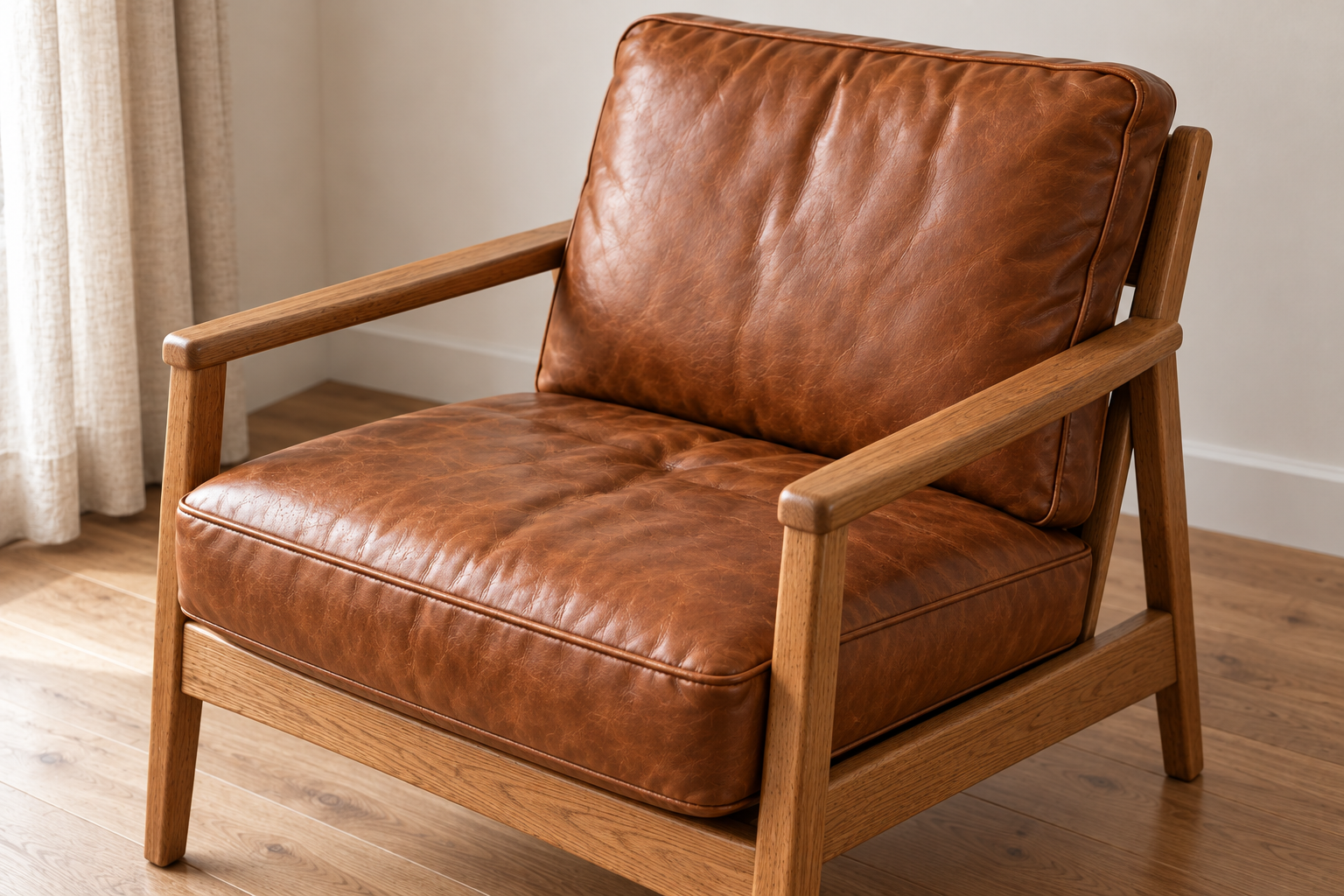
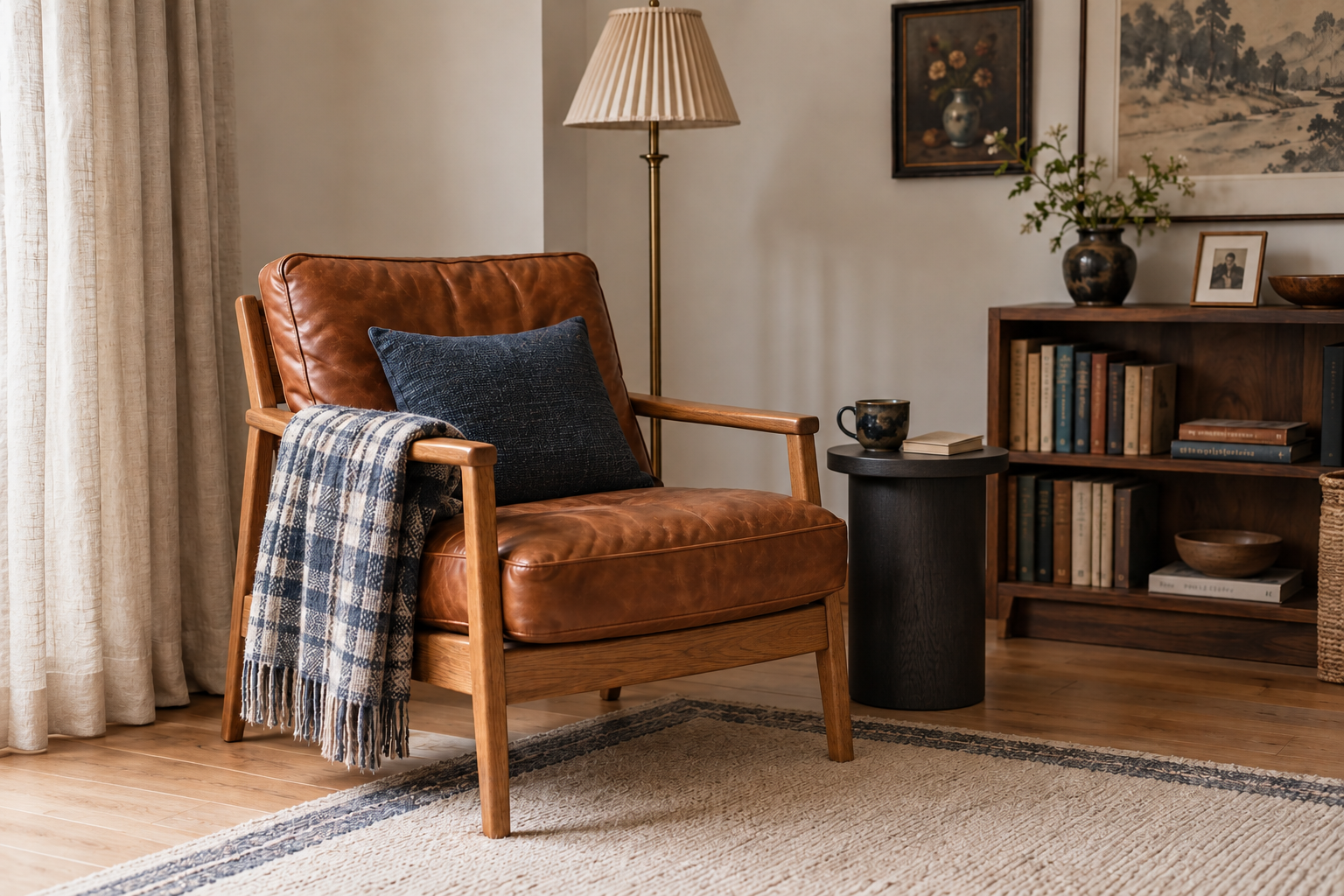
Photograph the corner before buying anything. If it feels calmer, works better and still looks like your home, you have a useful direction for the rest of the room.
Start with one change, photograph the room and check how it feels in daily use before adding another.