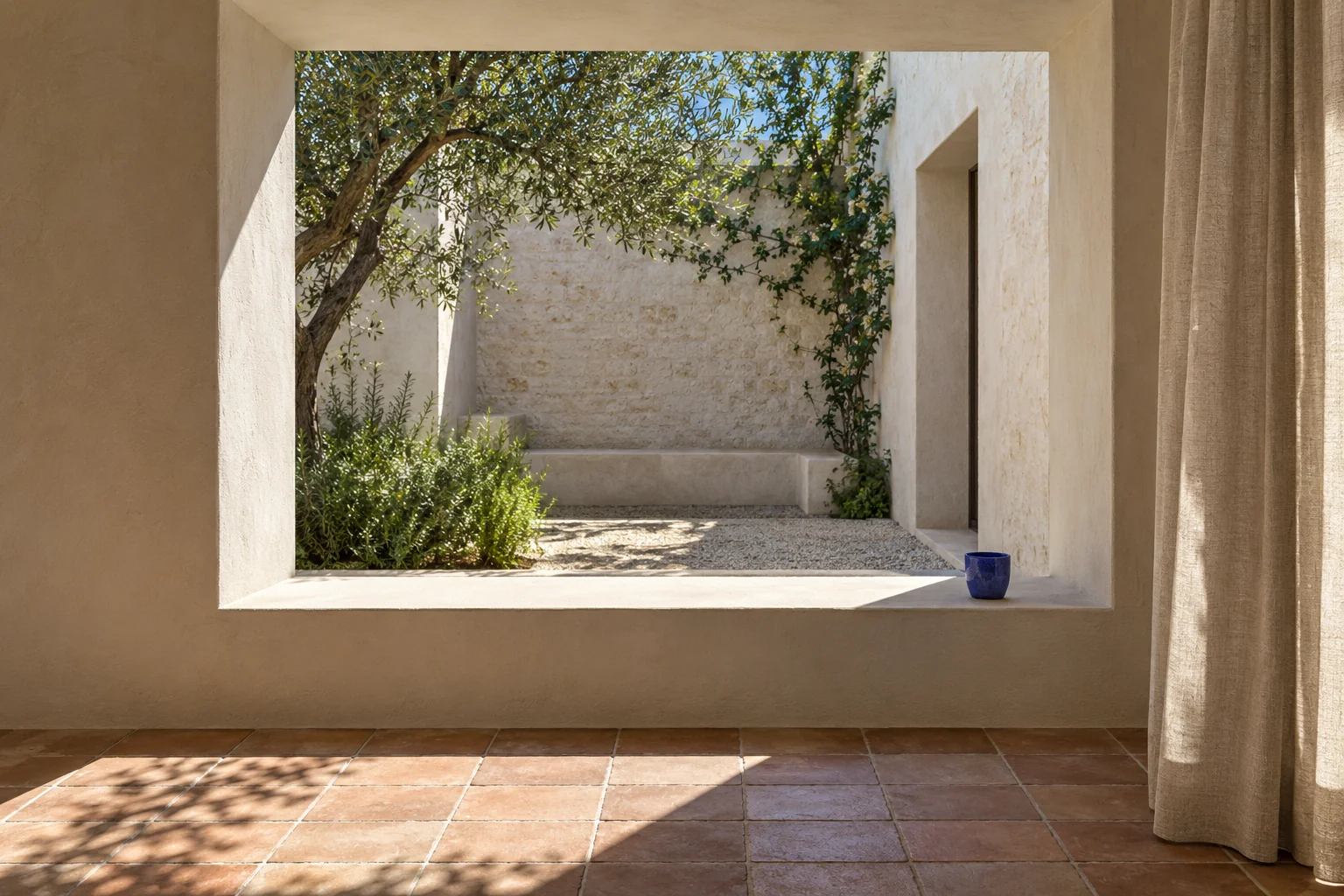
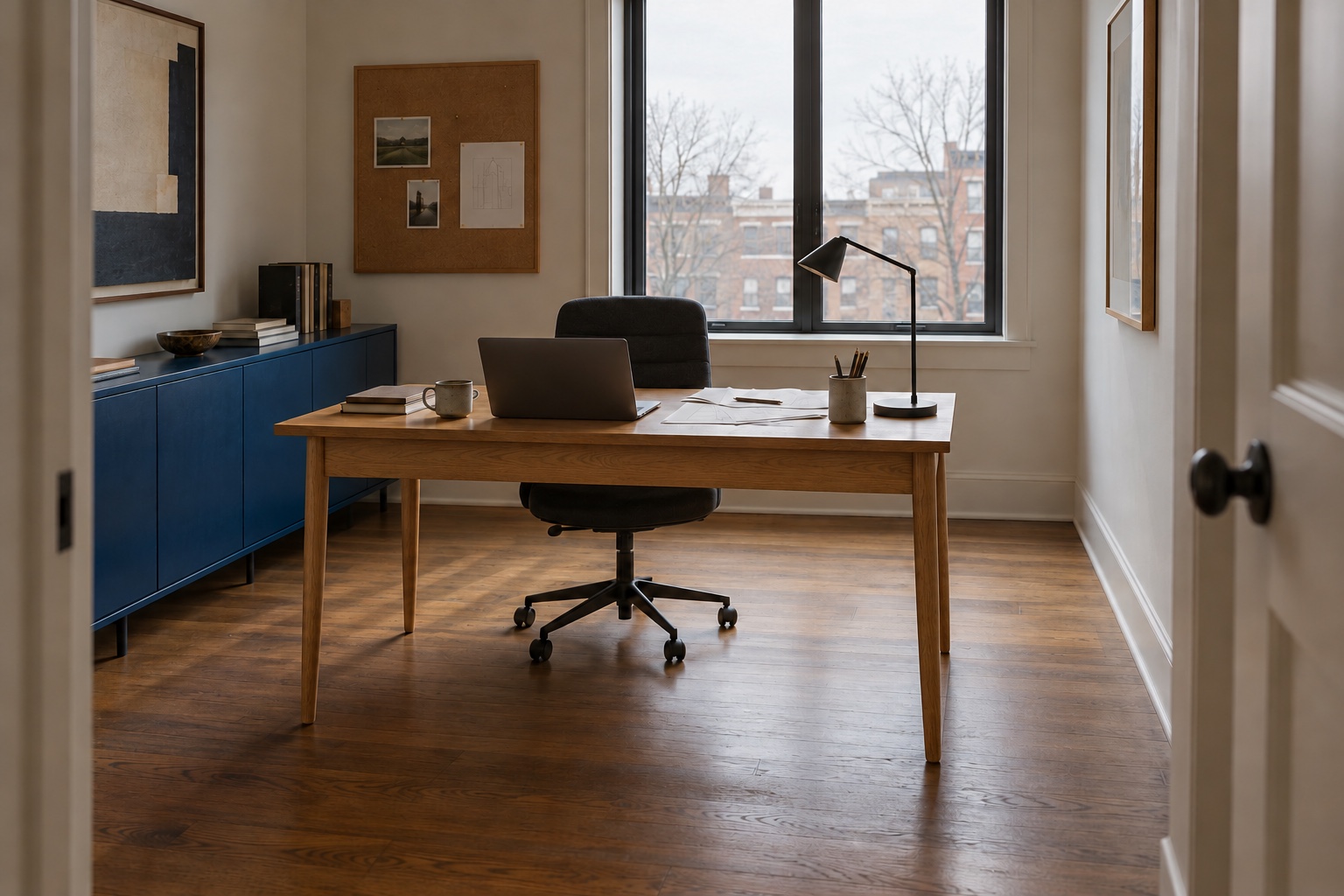
Modern rustic interior design works best when the materials carry the character and the arrangement remains clear. A worn timber edge, a pale stone surface or an old stool can bring depth to a room with simple contemporary furniture.
You do not need a converted barn, exposed beams or a complete set of reclaimed pieces. Start with what the room already offers, choose one tactile focal point and give it a quieter neighbour. The aim is a home that feels collected and comfortable, with pieces that earn their floor space.
The images are Maison Matière interior concepts, not documented projects or images of the named shopping products. The diagrams are Maison Matière illustrations; the floor plan uses stated hypothetical dimensions.
What makes a room feel modern rustic?

For this guide, “rustic” describes visible texture, grain, age or an irregular surface. “Modern” describes clearer shapes, a less crowded arrangement and pieces suited to present-day use. A large stone fireplace might provide the first part; a plain sofa, straightforward table and uncluttered wall can supply the second.
This is an editorial way to organise choices, rather than a fixed style rule. A room can borrow from several traditions. If you prefer softer forms and a less pronounced sense of age, compare our organic modern guide. If light, clay and window treatments interest you more than heavy timber, explore modern Mediterranean interior design.
A useful distinction from a farmhouse-inspired scheme is the amount of literal reference you introduce. A rural-looking object can be beautiful on its own. Add decorative farm signs, barn-door details and matching distressed finishes everywhere, and those references start to dominate. Choose the particular piece you enjoy rather than collecting every symbol of the style.
Pair texture with a quieter neighbour
Let texture meet a quieter edge

Weathered timber + dark metal. Let the grain carry the character; a smooth, straight frame gives it a clear outline.

Pale stone + bronze. A fine dark edge defines the lighter surface without another busy texture.
Woven textile + clean geometry. Let the weave provide detail while the furniture outline stays simple.
Materials need enough difference for their individual qualities to show. A strongly grained timber top looks clearer beside a restrained metal leg than beside several other busy wood finishes. Rougher stone can remain the main event when the wall, curtain and upholstery are calmer.
Studio McGee’s material discussion for The Oaks Project offers documented examples of wood, stone and metal working together. Our illustrations apply the broader idea of contrast to different hypothetical rooms; they do not reproduce that project.
Look at the meeting point as well as the materials themselves. A clean leg under a worn top changes its character. A neatly resolved edge can make a rougher surface feel intentional. Check those details in actual product photographs, especially where a large table would be prominent in your room.
Texture also asks practical questions. Will a ridged surface be easy to wipe after dinner? Do small objects sit securely? Is the tabletop smooth where forearms rest? Character is welcome, but a photograph cannot establish whether a rough finish suits the job.
Mix wood tones with samples, not guesses
Matching every wood finish can make a room feel purchased as a set. Mixing several near-matches can look accidental. Begin with the largest existing wood surface—often the floor—and compare a lighter or darker furniture sample against it.
Notice the finish as well as the colour. A glossy orange-looking floor and a pale matte table differ in more than tone. Try a small group of samples together with the upholstery, then remove one if the combination becomes busy. A painted cabinet can provide a useful break between timber pieces.
Use repetition selectively. A dark timber chair and picture frame may connect across a pale room, while the main table stays lighter. They do not need to be identical species. What matters is whether the differences read as a deliberate arrangement in your light.
Ask before buying: is the piece solid wood, veneer over a substrate, a mixture, or a printed wood effect? Veneer is not automatically a poor choice. Construction, edge treatment, repair options and finish are more useful questions than a blanket rule that only solid timber belongs in a rustic room.
Choose stone by use, finish and care
A small stone table can introduce a different surface without a major renovation. Its proportions and edge treatment matter as much as its pattern. Compare a sample against the upholstery and wood, then think about what will actually sit on it.
Ask the supplier to identify the material precisely and provide its care instructions. Natural stone, engineered stone and a stone-look surface are different purchases. A honed appearance does not by itself tell you whether a surface is sealed, stain resistant or suitable for outdoor use.
The same caution applies to timber maintenance. Room & Board’s wood and veneer care guidance distinguishes finishes and gives product-specific care advice. Do not add oil to a piece simply because it looks weathered; identify its finish and follow the maker’s instructions.
Bring the idea into four ordinary rooms
Living room: let one textured piece lead
If the fireplace or floor already has strong character, you may need very little additional rustic material. A simpler sofa, a rug with a quiet pattern and a useful reading lamp can let the room’s original details show. In a plain apartment, a timber table can take the leading role instead.
Place the furniture for conversation and reach before choosing decorative objects. A chair should face a useful relationship with the sofa or a genuine reading spot. Compare our living-room layout ideas if the seats currently float apart.
Dining room: an older surface, seats that work

An older table does not need matching chairs. Test their seat height, arm position and knee space against the table before concentrating on the finish. A plain pendant and painted storage can keep the table from competing with more timber.
Leave enough space for the dining chairs when occupied and pulled out. A bench might fit neatly beneath the tabletop but be awkward for someone seated in the middle. Choose for the people using it, rather than for the tidy photograph.
Bedroom: put the texture near the hand

A timber bedside surface, woven blanket or simple bed frame can introduce the style without cladding the wall. Keep the bedside top large enough for the things you use, and place the reading light where it serves the pillow position.
A decorative stool only becomes a good bedside table when it is stable, useful in height and appropriate for its intended load. Do not assume an old object is suitable merely because it fits the mood. Our small-bedroom ideas help prioritise access and storage.
Entryway: a shallow surface and a clear route

A slim console can give keys, post and a small lamp a home. In a narrow hall, start with its full depth and any projecting handles, then open the entrance door. A mirror should be placed for someone to use, and a bag needs a spot that does not spill into the passage.
Check the real furniture’s fixing requirements. A wall-supported console, a freestanding table and a narrow cabinet are different installations. The illustration shows an arrangement, not a mounting specification.
A measured study: material weight does not require a large footprint
A shallower table gives space back
Same 12 × 14 ft room, 84 × 36 in sofa and 18 in sofa-to-table gap.
48 × 36 in table
54 in to the wall
Measured from the far edge of the table.
48 × 24 in table
66 in to the wall
Measured from the far edge of the table.
- 1 · Sofa
- 2 · Coffee table
In this hypothetical 12 × 14-foot room, an 84 × 36-inch sofa sits along the left wall. The table starts 18 inches from the sofa front. A 36-inch-deep table leaves 54 inches between its far edge and the right wall; a 24-inch-deep alternative leaves 66 inches. The sofa, gap and room stay fixed.
Those figures describe an unobstructed strip in a deliberately simplified plan, not an accessibility standard or the complete furnishing layout. An extra chair, a lamp base or an opening door would change the usable space. The useful lesson is that a tactile top can keep its character while its depth changes.
Tape the outline of the actual table on your floor and walk around it. Include the legs and any overhang that extends beyond the advertised top. Our small-space furniture guide develops the comparison through seating and moving parts.
A considered US shopping edit
These options offer different ways to introduce wood, woven texture or a substantial lamp. They are researched starting points, not products we have tested. Listings were checked on 5 October 2026. These ordinary retailer links currently earn us no commission; check the selected variant, stock, care, delivery and returns.
Build the room in a sensible order
- Keep: identify the existing material or piece with the most useful character.
- Simplify: remove a competing texture or redundant decorative object.
- Connect: add a calmer surface or textile beside the leading material.
- Test: compare actual samples, furniture outlines and evening light.
- Purchase: buy the piece that solves a daily need as well as completing the material relationship.
Modern rustic questions
Can modern rustic work without exposed beams?
Yes. Furniture and textiles can provide the material character. Keep the existing room features straightforward and choose a few useful pieces with texture rather than adding imitation structural details.
Does the palette have to be brown and cream?
No. Indigo, olive, burgundy or a painted cabinet can sit beside timber and stone. Try one colour where it can make a difference; our gray-couch palette guide offers combinations that also work with natural materials.
Sources and editorial notes
Material comparisons and the hypothetical table study are original Maison Matière work. Studio McGee’s linked project provides a documented designer reference; Room & Board supplies the linked care guidance. Shopping specifications come from the named US listings. We have not inspected or tested these products, and an aged-looking finish does not establish reclaimed provenance.
Continue with our rug size and construction guide, or read our editorial standards and shopping disclosures.
Still deciding which details feel like you? Our visual guide to interior design styles compares furniture shapes, materials and ways to mix what you love.
Start with one change, photograph the room and check how it feels in daily use before adding another.