

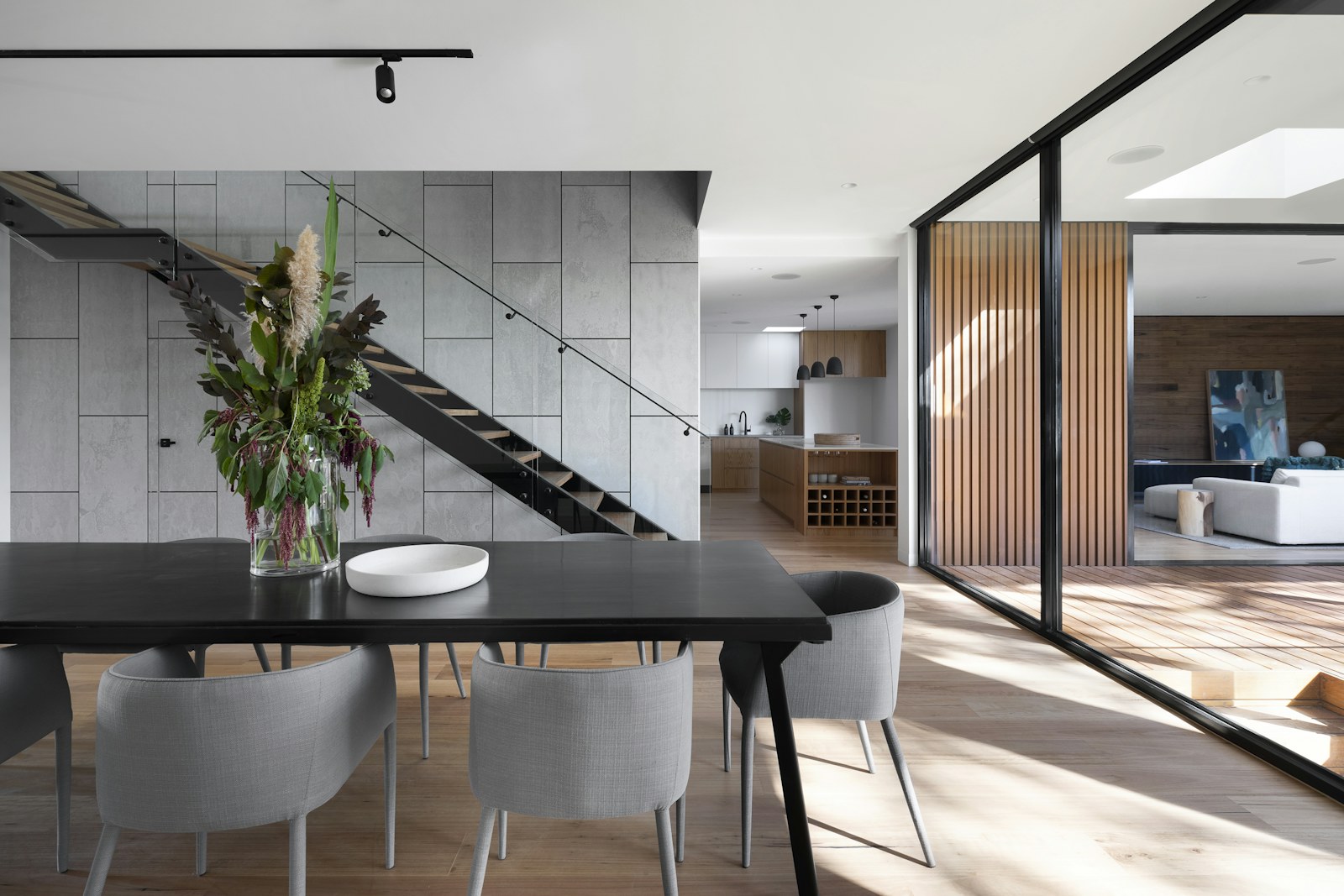
Organic modern interiors bring simple contemporary shapes together with the warmth and variation of natural materials. The effect depends on relationships: smooth beside rough, straight beside curved, pale beside dark. It is less about collecting beige objects than finding a comfortable balance.
Begin with a restrained palette
Choose a small family of colours you enjoy in the room’s actual light. Warm white, muted earth tones and deeper accents can work together, but undertones matter more than names. Place samples beside the floor and existing furniture before deciding.
Let texture create variation
Timber grain, woven textiles, ceramic glazes and stone can give a limited palette depth. Repeat a material in a few places to make the room feel connected, while varying the finish or scale so it does not look like a matching set.
Balance soft and precise shapes
A curved chair becomes clearer beside a straight-lined table. A simple sofa gives an irregular handmade object room to stand out. Too many sculptural forms compete; choose where you want the eye to pause.
Add contrast with intention
A dark frame, lamp base or cabinet can give a light room definition. Spread darker notes through the space without repeating them mechanically. Photograph the room in black and white to see whether its shapes still read clearly.
Keep daily life visible
Leave room for books, useful objects and things with a personal history. Storage can handle visual clutter, but an interior does not need to be empty to feel calm. A favourite chair that supports your routine matters more than a perfectly matched accessory.
Use the interior design styles index to compare approaches, or apply these principles to a living room layout.
Start with one change, photograph the room and check how it feels in daily use before adding another.