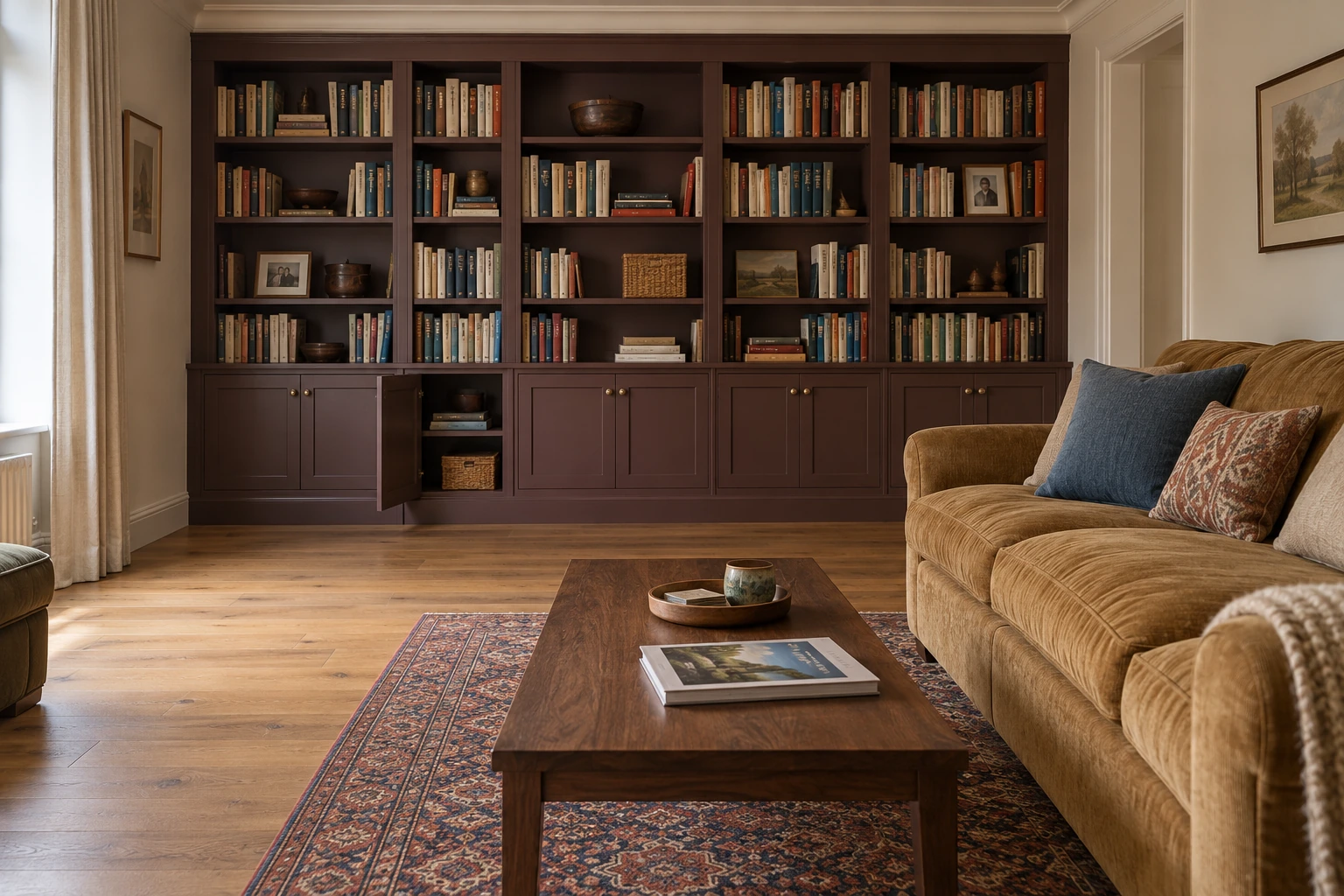
A small living room does not need to be filled with lamps to feel inviting. It needs light in the places where you read, talk and watch television—and fixtures that leave enough room for those activities.
Begin with the seats, the sockets and the surfaces you already have. A compact table lamp may be the right answer when a side table is available. A wall light can keep that surface free. A floor lamp can bring light to a chair without asking you to add another piece of furniture.
The images are Maison Matière interior concepts. The evening comparisons illustrate lighting choices; they are not measurements of brightness, energy use or product performance.
Start with three questions about the room
Where do you sit? Mark the sofa, reading chair and any seat used for work. Light needs to reach the activity, rather than simply make the ceiling bright.
What space can a fixture occupy? Include its shade, base and moving arm. A narrow stem does not mean a small footprint, and a wall light can still project into the space beside a chair.
How will you turn it on? Check the socket, cord route and switch position from the seat. A lamp that is convenient in a showroom may need a reach behind furniture in your room.
If the seats are not yet settled, start with our awkward-room layout guide. For daylight and privacy decisions, compare curtain layers that work through the day. Electric lighting and window treatments solve different parts of the same room.
A shaded table lamp: use an existing surface well
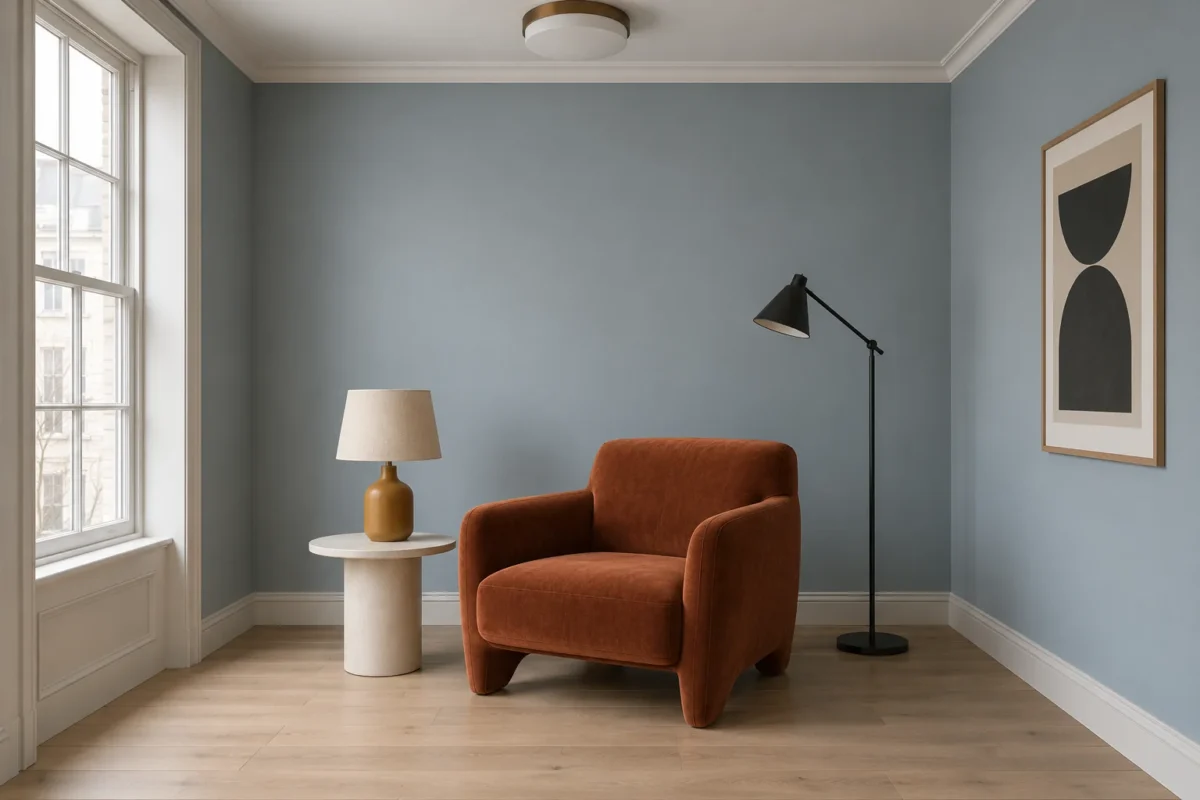
A table lamp can give a seating area a quieter evening setting without altering the room. Look for a relationship between the lamp, shade and table, rather than judging the lamp’s height in isolation.
From the seat, check whether the shade conceals the bulb and whether its light reaches the book or surface you use. A beautiful opaque shade may direct most of the light downwards; a more translucent shade can also illuminate its surroundings. Neither is automatically suitable for every job.
Check from the seat
- 1 · Shaded lamp
- 2 · Seated eye
Test whether the shade conceals the bulb from your usual seat, including when you lean back.
The sculptural lamp in our cover concept creates an evening focal point, while the small detail drawing above shows the sightline to check. It does not prescribe one universal shade height: the chair, table and person using them all affect that relationship.
Choose this when: a side table or console is already well placed. Look elsewhere when: adding a table would crowd a route, or the lamp leaves no useful surface for everyday objects. A compact adjustable task lamp may be a better fit when reading is the main purpose.
An adjustable floor lamp: bring light to the chair
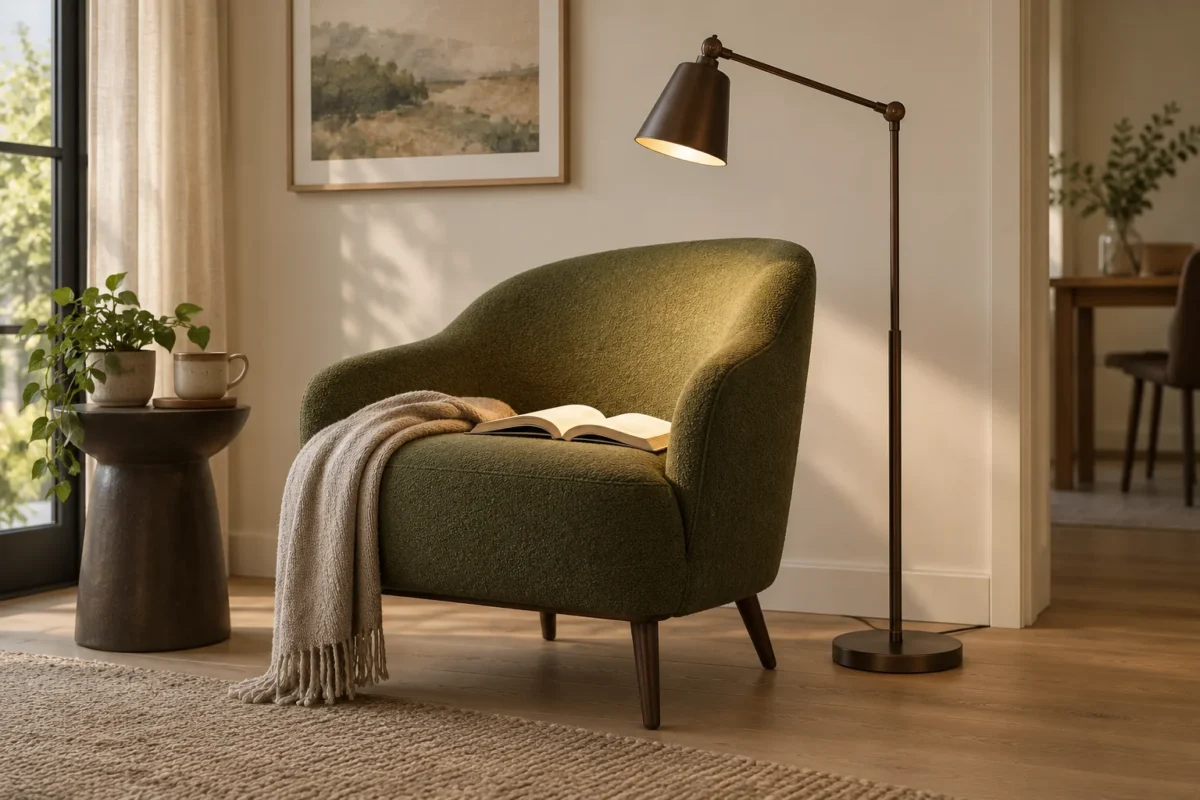
A reading lamp can place the light close to the book while leaving the nearby table free. Check its complete base shape and the space its arm uses when adjusted. In a compact room, that movement can matter as much as the advertised height.
Try positioning the light beside or slightly behind the seat, then judge the result from the position you actually use. The useful test is whether the page is comfortably visible without staring into the source or casting your own shadow across it.
Choose this when: you want focused light beside a chair and have room for the base outside the main route. Look elsewhere when: the stand needs to occupy a narrow passage or the arm projects where people stand up.
A tall floor lamp that sends light towards a wall or ceiling performs a different job from a narrow reading head. Decide whether you need general room illumination, a task light or both before comparing designs.
A plug-in wall light: free the surface, check the projection
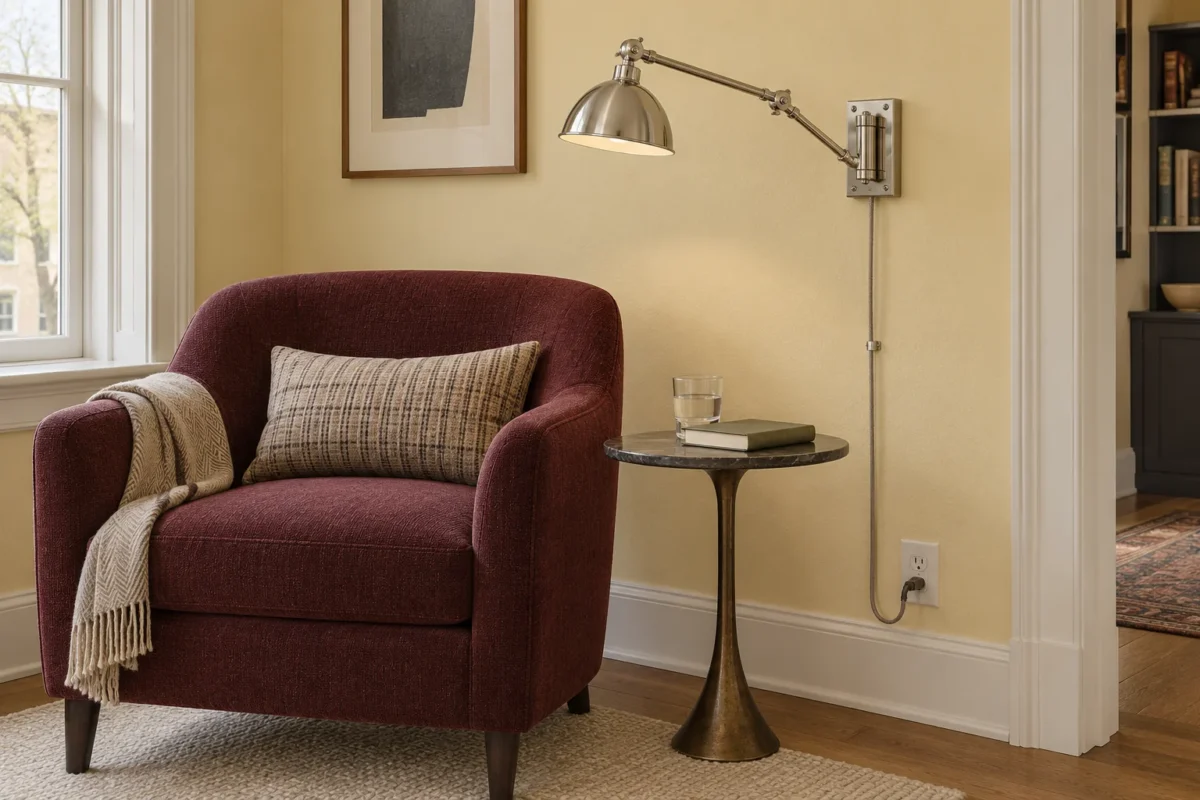
A plug-in sconce can give a chair its own light without using the tabletop or floor for a base. It still needs an appropriate wall fixing, a reachable socket and a tidy cord route. Plug-in describes the power connection; it does not necessarily mean a no-drill installation.
Check the arm’s full projection and movement. Imagine the lamp folded away, extended over a book and in the position it might take when someone gets up. For a rental, confirm permission for the required fixings before buying.
Choose this when: the seat will stay in a reliable position beside a suitable wall. Look elsewhere when: you rearrange the room often or cannot mount the fixture as instructed. Follow the manufacturer’s installation directions; use a qualified electrician for work that requires one.
Compare the space the light really needs
A light occupies more than its base
- Table lamp
- Check the surface taken by the base and shade, and the cord route.
- Floor lamp
- Check the base, arm movement and the full reach of the shade.
- Wall light
- Check projection into the room, fixing position and the cable route.
Compare three different boundaries: a table lamp uses part of an existing surface; a floor lamp uses floor area and sometimes overhead reach; a wall light uses wall space and projects outwards. A small base is only one part of the decision.
The drawing uses generic examples, not the products below. Tape out the actual base diameter or plate size from the specification, then check the moving envelope around it. Include the cord where it will run, especially near doors and the route to the sofa.
Our small living-room furniture guide uses the same approach: measure the piece in use, not just as it appears in a neatly styled photograph.
See what changes when the light is distributed
These two evening concepts begin with the same reading corner shown earlier. The furniture, lamp positions and camera are retained; the intended change is which light sources are active.
Ceiling light alone
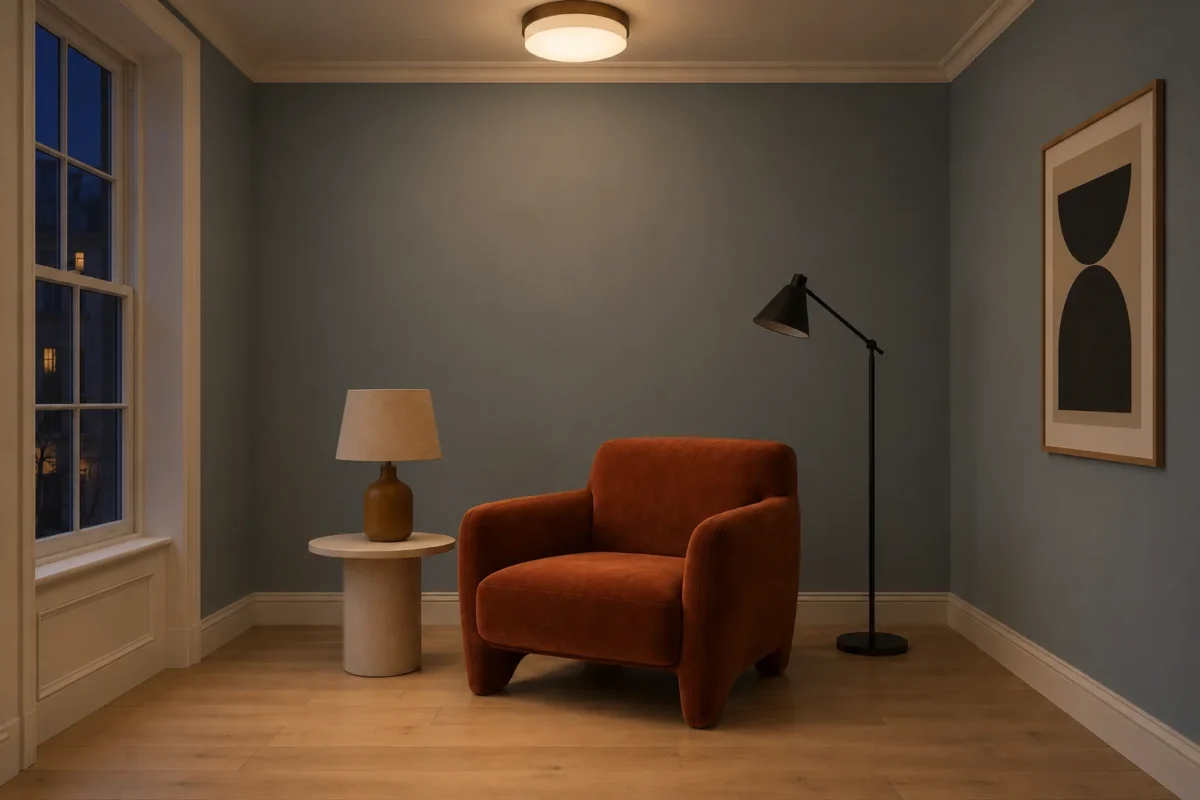
The overhead fixture provides the room’s general light. That can be useful for moving around, cleaning or finding something. It may not create the particular reading setting or evening emphasis you want beside the chair.
A gentler overhead layer, a shaded lamp and a reading light
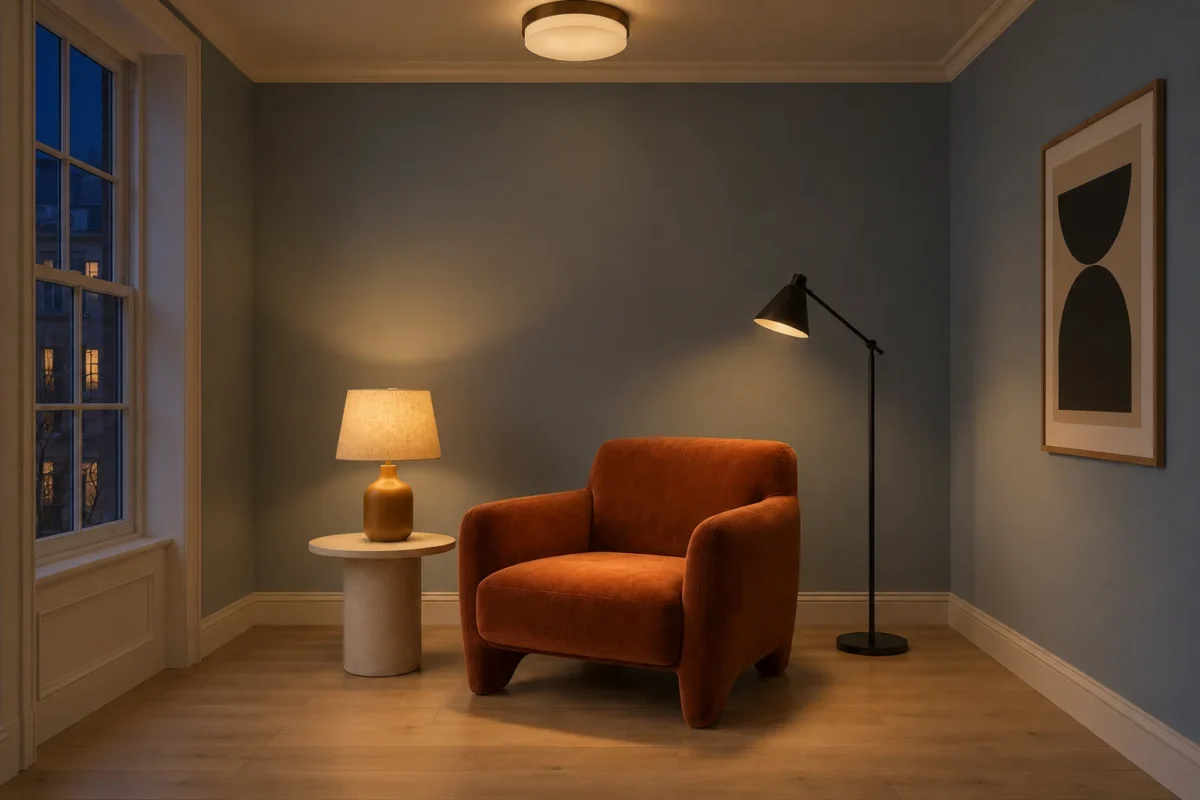
Here, the table lamp adds a local pool of light and the adjustable head brings light towards the seat. The ceiling fixture is intended to provide a gentler background level. You do not need all three on every evening; the point is to have useful choices.
These illustrations do not establish exact light levels. At home, move the lamps you already own, take photographs from the same position and judge the room while reading, talking and watching television. That trial can reveal a placement problem before you spend money.
For pendant, picture-light and kitchen examples, continue with our four lighting-placement fixes. This guide focuses on selecting compact living-room fixtures; that article explains how to improve their position.
Check light from the television seat
Check reflections from the viewing seat
- TV switched off
- Look at the screen from your usual seat and notice reflected lamps and windows.
- Lamp in use
- Try the light at different positions while checking the screen from the same seat.
- Choose the position
- Keep useful task light without a distracting bright reflection.
Turn the screen off briefly and look for the lamp’s reflection from your usual seat. If a bright source is reflected in the screen, try changing its position or direction before replacing it. A view that looks calm from the doorway can be uncomfortable from the sofa.
Also check whether a bare bulb is in your direct line of sight. A dimmer can reduce output, but it does not remove a reflection or conceal an exposed light source. Shade design and placement need to do their part.
Use our small living-room TV arrangements to consider the screen and main seat together. A reading light and a television setting may need different switch combinations.
Read the bulb and control details before ordering
Colour temperature: Kelvin describes the colour appearance of light, not its brightness. For a warm evening setting, 2700K and 3000K are useful options to compare in your actual room. Surface colours and the other lamps you use influence the result.
Brightness: compare stated lumens, light distribution and the job you need the fixture to do. A small directed task source cannot be compared with a room-lighting lamp on appearance alone. Avoid choosing by wattage as if every lamp produced the same light per watt.
Dimming: verify the fixture, bulb and control combination. A replaceable LED bulb may need a compatible dimmer; an integrated LED lamp may use its own control. “LED” does not by itself mean dimmable.
Service and use: find out whether the light source is replaceable, how the switch is operated and whether the cable can reach its socket without crossing a route. Check the selected US electrical specification and installation instructions.
A compact lighting plan, including a room without overhead light
Give each source a useful job
- 1 · Reading at the chair
- 2 · Shaded light at the sofa
- 3 · Broader light towards a wall
The plan separates the room’s jobs: a reading source beside the chair, a shaded lamp near the sofa and a source aimed towards a wall for a broader background layer. It shows possible positions, not a requirement to buy three new fixtures.
Without an overhead light, start by testing whether your existing portable lights can distribute illumination around the room rather than gather in one corner. Then identify the missing job. A brighter general-lighting fixture may be more useful than a third small decorative lamp.
If you want to light an artwork, check the wall composition and main viewpoints as part of that choice. Lighting can support the room’s focal point without becoming another competing feature.
Three researched lighting options for US shoppers
This edit compares different jobs rather than declaring one lamp the winner. We have not tested these products in person; the links are ordinary retailer links and currently earn us no commission. Specifications were checked on 7 November 2026. Confirm the chosen finish, source, controls and installation details before ordering.
A useful lighting trial for tonight
- Choose one seat and the activity that needs better light.
- Move an existing lamp to test the proposed position, with a safe cord route.
- Check the source from the seat: can you see a bare bulb or an unwanted screen reflection?
- Use the room: read, get up, reach the switch and walk past the lamp.
- Name the remaining gap before choosing a fixture: reach, general illumination, surface space or controls.
When the light and furniture work together, the room often needs less decoration to feel finished. Explore more living-room guides, including choosing a rug that connects the seating.
Sources and editorial notes
- Illuminating Engineering Society: task-ambient lighting—how focused task light relates to general room light.
- US Department of Energy: light-bulb buying guidance—Kelvin, warm-light options and dimming checks.
- The linked retailer product listings supplied the shopping specifications, checked 7 November 2026.
The room concepts and diagrams are original illustrative work. They are not measured lighting calculations, wiring plans or depictions of the named products. Read our editorial standards and disclosure policy.
Start with one change, photograph the room and check how it feels in daily use before adding another.