

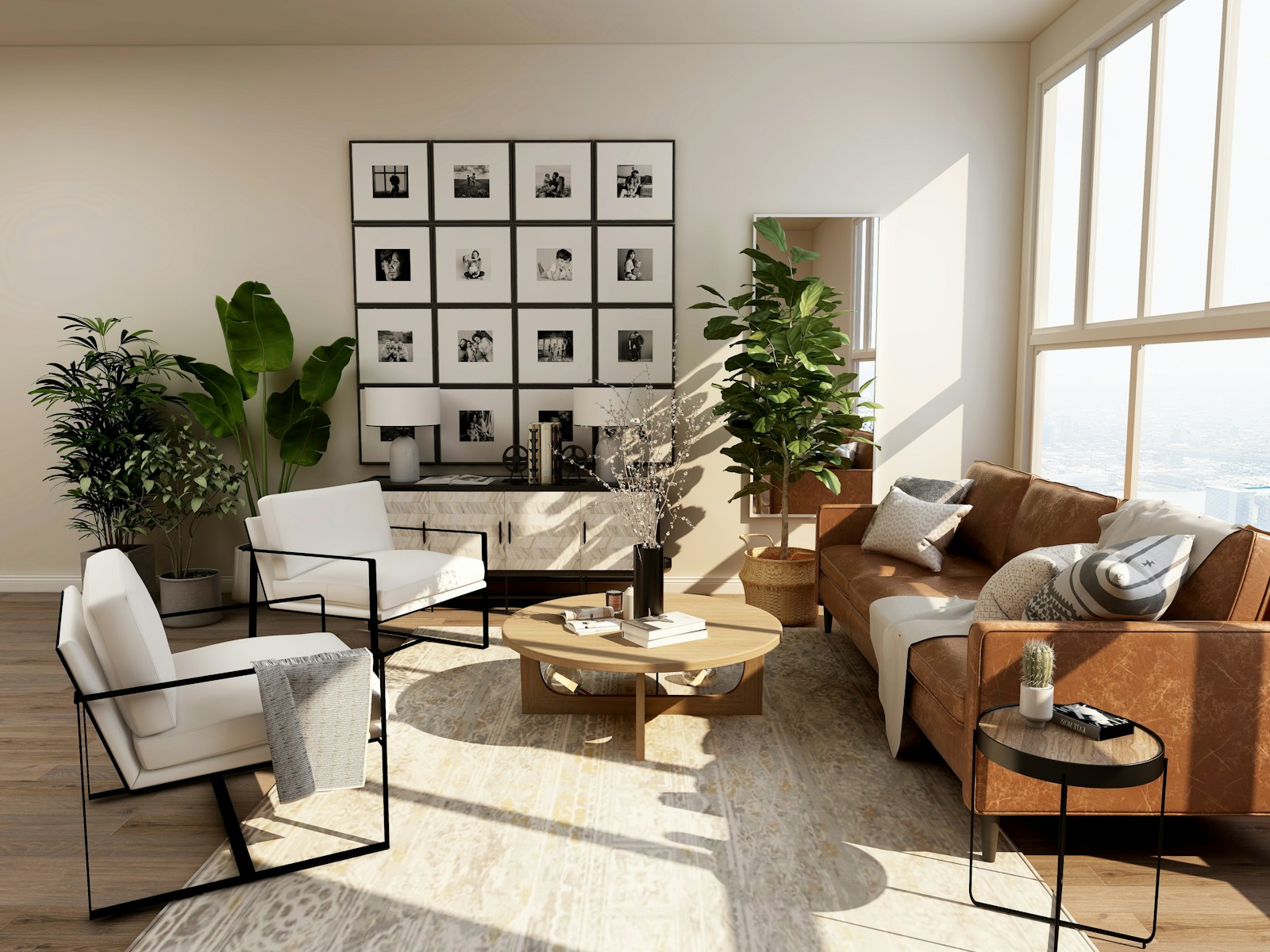
A wall can feel unresolved even when it holds something beautiful. Often the issue is the relationship between the object, the furniture beneath it and the empty space around both. Start by deciding what the wall needs to do: create emphasis, add warmth, reflect light or hold a collection.
Make one clear gesture
A single larger work can be calmer than several small pieces scattered across a wall. Test its outline with paper before buying or drilling. Judge it with the sofa or cabinet beneath it, rather than measuring the wall in isolation.
Build a gallery wall on the floor
Arrange the frames on the floor first and keep spacing reasonably consistent. Choose one relationship that holds the group together: frame colour, subject, palette or a shared edge. The pieces need not match, but they should read as a deliberate group.
Use mirrors for a reason
Check what a mirror will reflect from the main seats. A view of a window, garden or a quiet part of the room may be more useful than reflected clutter. Avoid positioning it where harsh light becomes uncomfortable.
Consider a textile or shallow shelf
A woven piece can add softness to a room with hard surfaces. A picture ledge makes it easier to change a collection without repeatedly drilling, but its depth and position should suit the walkway. Follow the fixing instructions and check the wall construction.
Keep some space quiet
Every wall does not need equal attention. Let one carry the main composition and allow nearby surfaces to rest. Check the result from the doorway as well as from the sofa.
Bring the wall into the full composition with our layout guide, or explore organic modern materials and contrast.
Start with one change, photograph the room and check how it feels in daily use before adding another.