Travertine can work as a quiet floor, a textured wall or one very good coffee table. Choose where you want it first. A surface that catches shoes, toothpaste or a splash of wine has a different job from the stone in a photograph.
You don’t need a roomful of it. A pale table beside a dark sofa can bring all the contrast you were missing. The useful question is how much stone you want to live with—and what you’re happy to do to keep it looking good.
What is travertine?
Travertine is a natural limestone formed as mineral-rich water deposits calcium carbonate. Its small cavities and changing bands of color are part of its character. The National Park Service explains the process through the terraces at Yellowstone.
It isn’t marble, even when a listing uses that word loosely. And travertine-look porcelain is a manufactured tile with a stone-inspired surface. Ask what the material actually is before comparing its appearance, price or care.
Travertine finishes: what “honed” and “filled” actually mean
Honed describes the finish; filled describes the cavities. A piece of travertine can be both. This small distinction makes product descriptions much easier to read.
A honed surface has a smooth, matte appearance. Polishing adds shine; tumbling gives the stone softer, weathered-looking edges. Filled travertine has its cavities filled with another material, while unfilled stone retains open pits. MSI’s stone guide explains these treatments.
Run your hand over an actual sample. Imagine setting down a glass or wiping away crumbs. The texture you enjoy on a wall may be less appealing under your breakfast plate. Check the edge, too: a small sample can hide how substantial a finished tabletop will look.

Where travertine works in a real home
Think about what touches the surface, then how you’ll clean it. The answer is more useful than deciding whether travertine is “good” or “bad” for an entire room.
Travertine flooring and bathroom tile
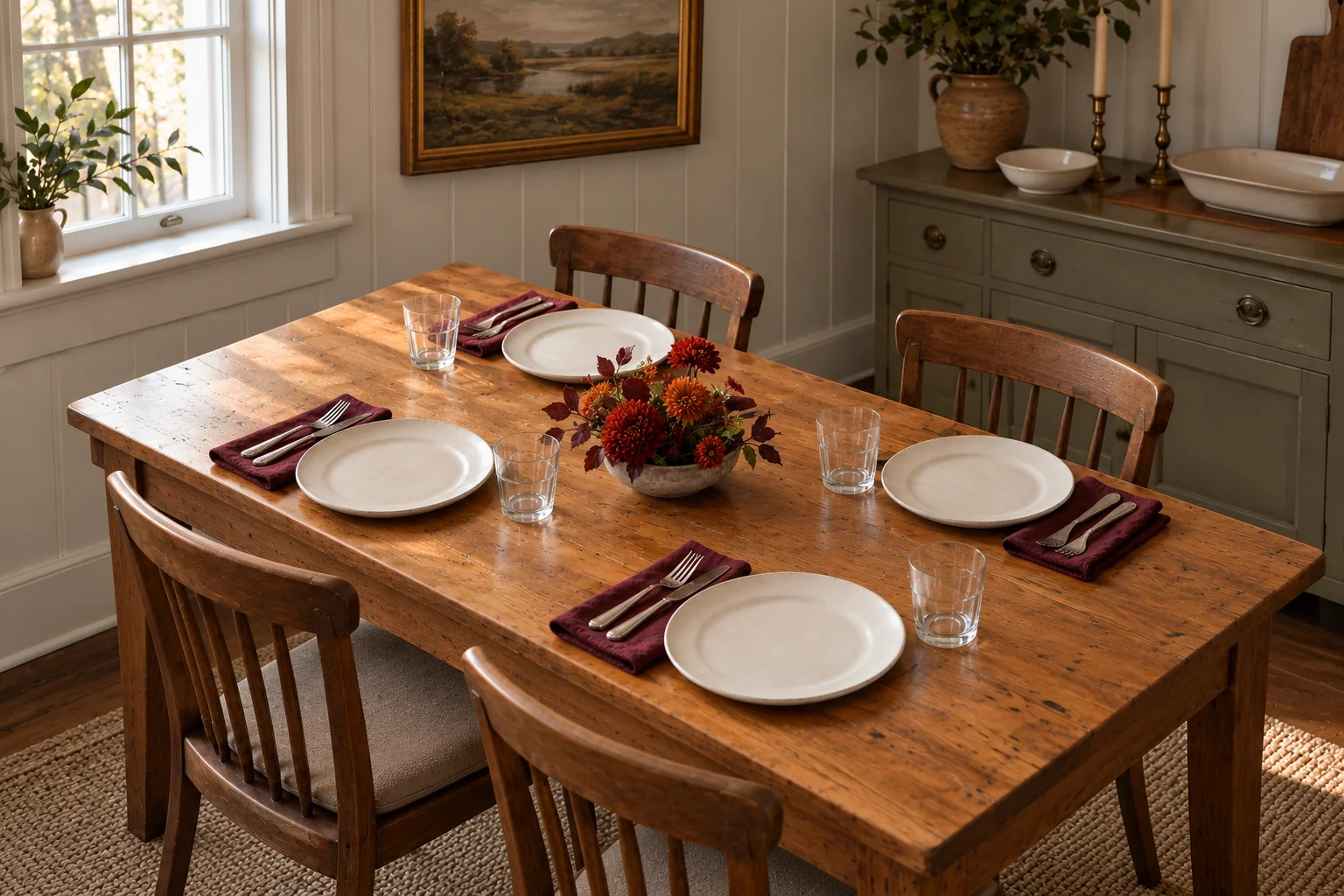
A pale stone floor gives dark dining furniture a clear outline. The table and chairs stand out against the lighter ground, so the room can take richer colors without everything blending together. Keep the grout and stone reasonably close in tone if you want the furniture to be the first thing you notice.
For a bathroom, check the exact tile’s intended use. Approval for a wall doesn’t establish suitability for a floor or shower floor. Ask the supplier about the finished surface and wet-area requirements, then work through the whole pairing with our bathroom wall-and-floor tile combinations.


A travertine coffee table, with room to use it
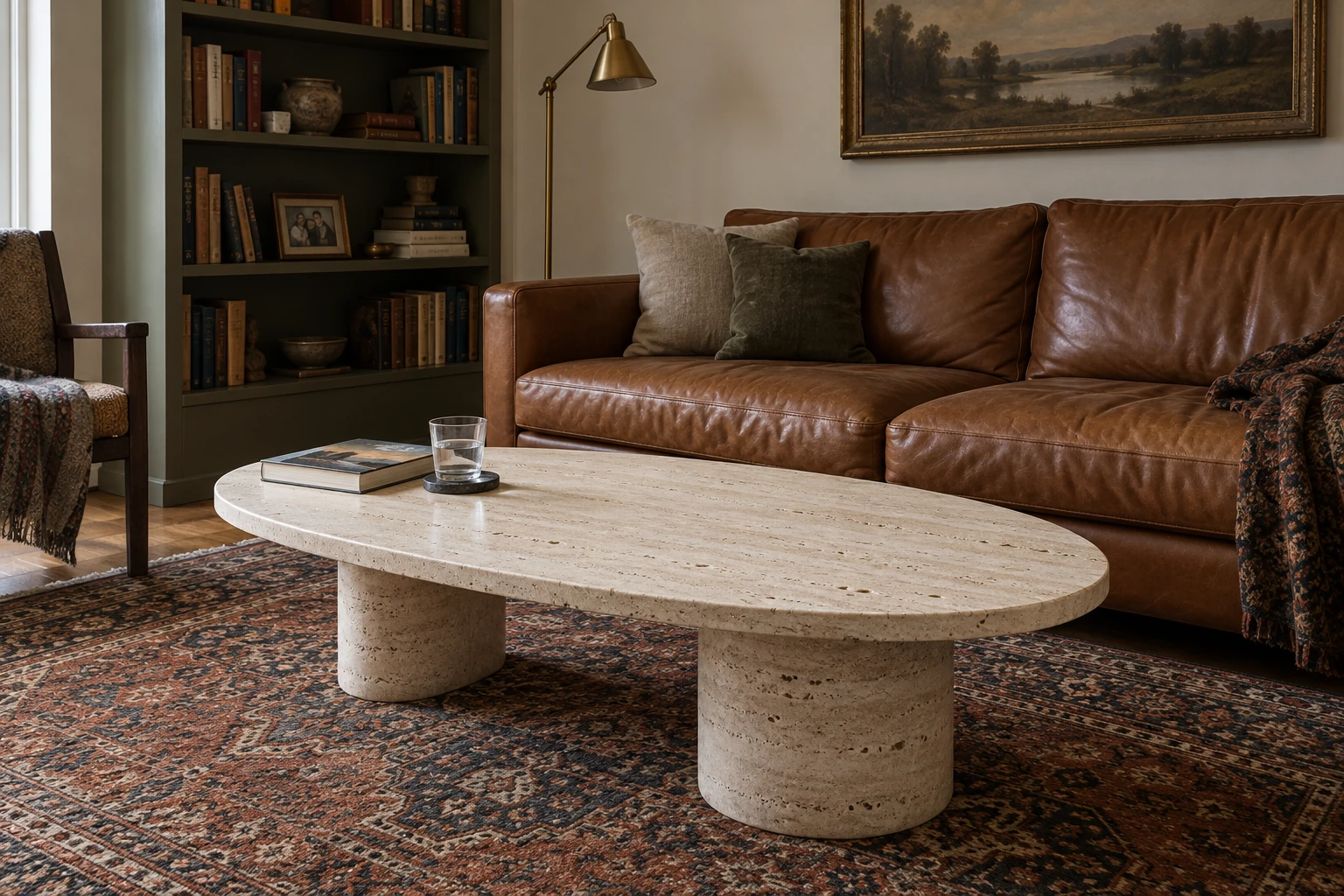
A coffee table is a way to introduce stone without changing the room around it. In our living-room concept, pale travertine stands out against cognac leather and an olive bookcase. The room already has plenty of color; the stone gives your eye somewhere quieter to land.
Leave enough clear tabletop for the things you actually put down. Tape out the footprint before buying, walk around it and check the table’s height beside your seat. Ask whether it’s solid stone, veneer or another construction; similar-looking pieces can be made quite differently.
Travertine countertops: think about spills first
Travertine’s calcium carbonate is sensitive to acids. Lemon juice can etch the finish; that dull mark is different from an absorbed stain. Sealing isn’t a cure for that reaction. The Natural Stone Institute’s care guidance explains the distinction.
If you want a counter you can wipe without much thought, discuss that expectation before choosing the slab. Ask the supplier to confirm the intended use, finish and care in writing. A product specified for a wall or floor is not automatically the right choice for a working counter.
You might prefer the stone on a smaller decorative surface and a different material where you prepare food. Our kitchen island ideas can help separate the island’s shape and purpose from its finish.
Travertine colors: what to put beside the stone
Start with the undertone of your sample. Creamy travertine beside cognac leather feels warm, but the two can blur together if everything else is beige. An olive cabinet or a darker patterned rug gives the pale stone a clearer outline. A small brass detail adds a little reflection without making the whole room shiny.
With a cooler, grayish travertine, try a warmer wood sample alongside it. There’s no need to match every grain or make the rug the same color as the stone. Our kitchen material combinations show how neighboring finishes change one another.
Worried it will look dated? Choose the combination you like in your own room, rather than collecting everything currently sold in travertine. Keep the sofa, cabinet or dining chairs you already enjoy. One considered change often does enough.
How to clean travertine—and when to seal it
Use a stone-appropriate neutral cleaner according to its directions, rinse and dry. Blot spills promptly, keep coasters handy and remove grit from floors. Avoid acidic cleaners such as vinegar; check a disinfecting wipe’s exact label rather than assuming it is suitable for stone.
Sealing can improve stain resistance; it doesn’t make stone stain-proof. Ask your stone supplier and sealer manufacturer whether sealing is needed and how often. There isn’t one useful calendar for every surface and product. See the Natural Stone Institute’s cleaning and sealing advice.
Travertine-look porcelain: when it makes more sense
If you like the color and pattern but want to explore a different care routine, compare travertine-look porcelain. Look at several full tiles together: repeated markings and the way the edges meet can be much more noticeable across a wall than on one sample. Porcelanosa’s travertine overview includes both natural stone and manufactured interpretations.
Check the chosen product’s care and application information. A stone effect tells you how it looks, not where it can be installed.

Before you order, bring the decision back to your room:
- Put several samples beside the furniture or finishes you’re keeping, in daylight and evening light.
- Confirm the material, fill, finish, size and intended use in writing.
- Compare the complete cost. For tile, include preparation and installation; for furniture, include delivery and assembly.
- Ask yourself whether the care suits your routine. An appealing sample still needs to earn its place at home.
Start with one change, photograph the room and check how it feels in daily use before adding another.